Monday, 23 December 2013

The Process of Architecture

We’ve received some good questions lately about the process of architecture from the homeowners point of view.  What do the different design stages look like graphically?  When does the process go from diagram to actual architecture? Why do the graphics look the way they do?  How does the imagery evolve and become something you can actually build from and eventually live in?
All admirable questions and ones that should be better explained by us architects.  Given that it takes an average of 6 years to learn the architectural design process in school and another decade to really learn how to implement it in the practice of architecture – the process can be a bit esoteric.  This blog aims to communicate architecture in such a way that it’s more understandable and accessible to people.  So here goes… the quick and dirty guide to the architectural process.  Now take this with a grain of salt – this is just our process, it’s not the right way or the wrong way to design, it’s certainly not the only way.  Put ten architects in a room together and you’ll get ten different processes (in addition to a bunch of black turtle necks and acronyms you’ve never heard of).
Step 1: Interview and initial discussions 
Often a couple of architects are interviewed, the homeowner(s) and the architect(s) figure out if there is a good fit with one another.  Sometimes a homeowner just knows who they want to partner with (based on a raving recommendation or a specific design philosophy, etc.) and they skip the interview step.  Typically the architects have a portfolio of past projects to review and possibly examples of their process.

Step 2: Information gathering + documentation 
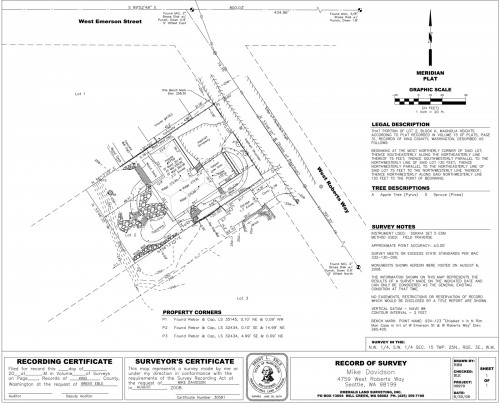
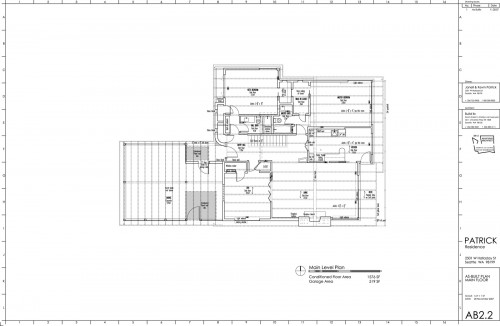
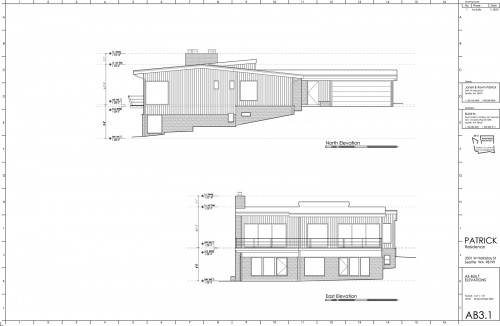
Homeowner goals, needs and requirements are discussed.  The architects visit the site, review the existing conditions and take as-built measurements of what is there (existing home/property).  A set of as-built plans are created and a copy is given to the homeowner for their records.  These are simple floor plans and exterior elevations – a minimal set showing what currently exists on site and nothing more.  A surveyor is typically contacted at this stage and scheduled to produce a site survey – this survey is eventually incorporated into the as-built documents.  The architects visit the city/county building department to review applicable records which may include as-built drawings of an existing home; previous surveys; public records such as previous liens on the property.  The architects gather information from state and city agencies regarding specific land use and building code requirements as well as pre-submittal and pre-permit procedures.  The architects also create a work plan to outline what will be done and by when.
Gathering information with the homeowner(s):


Survey:
As-built drawings of an existing home:
Step 3: Schematic Design and Feasibility
The architects generate 2-3 preliminary designs incorporating the information from step two.  At this stage the architects are also bringing design concepts to the table (the stuff architects learned in school).  Maybe there was a specific site feature that could be enhanced with the new architecture or opportunities within the project not previously discussed.  The architects explore the sequence of how you approach the house and move through the house.  How the home is experienced is a focus of this stage.  The general locations of the functions within the house are considered and graphically represented in diagram form.  The graphics, illustrations and sketches are just diagrams at this stage – it’s not architecture yet.  Features like windows may be added schematically or not at all.  Simple plans and elevations are produced to represent relationships among spaces and the basic envelope shape (think about it like carving a simple, dumb model out of a block of clay).  Material options start to become part of the discussion and a target budget is established/confirmed for the overall project.  There are typically 2-4 homeowner meetings involved with this step.  The homeowner makes decisions with help from the architects regarding the various schematic options.  An overall design strategy is chosen.
Code analysis and envelope possibilities:
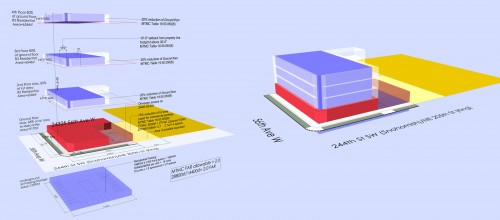
Relationship of functions, site considerations, massing studies:

Relationship of functions, massing studies:

Circulation studies, light studies:
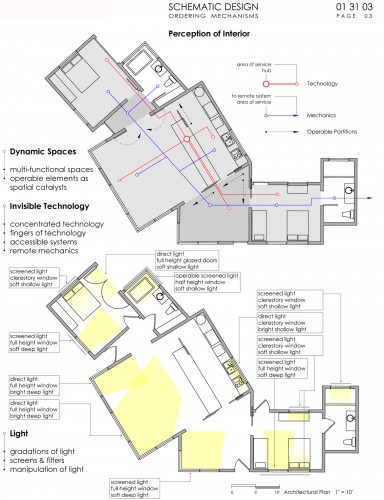
Step 4: Design Development + Permit Documents
As decisions continue to be made, the architects develop the schematic drawings into permit documents.  The graphics evolve from diagrams to actual architecture at this step.  The drawings are refined in regards to details and methods.  Materials are decided on and the architects figure out how everything fits together (how does the floor meet the wall: base trim, flush trim, no trim).  Window openings are further defined with mullions and opening locations.  Information from other consultants, like the structural engineer, is developed and coordinated with the design drawings. Specifications for materials, fixtures/ appliances, assembly details, and relevant code information are incorporated into the project.  Recommendations from trades, suppliers, and manufacturers are added to the drawing set.  The homeowner continues to make decisions at a more specific level of detail (four or six burner gas range, which direction do the windows open?)
Material studies and furniture layouts:

Comparative material options:

Building assembly and material breakout:

Elevation and material studies:

Step 5: Construction Documents + Permit Acquisition 
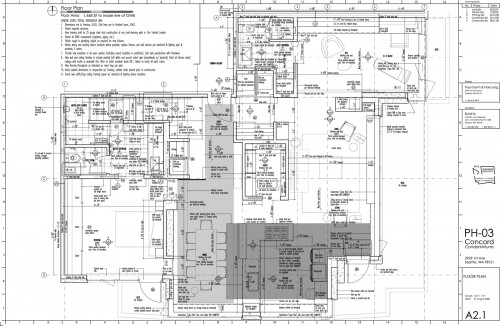
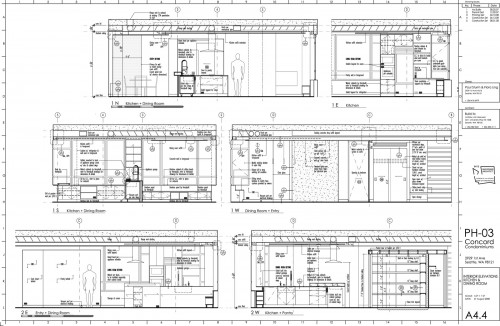
A set of permit drawings is a simplified construction set.  The permit documents are used to submit, coordinate, and obtain the building permit from the city or county.  The city/county doesn’t typically care to review each and every detail of a home – they just want to make sure you’re meeting state, city and local codes.  It is typically an effective use of time to turn in a permit set early, covering the requirements, to get the ball rolling with the city while the architects continue to work on a more thorough drawing set required for construction.  The drawings continue to develop down to the very last details (how the handrail bracket connects to the wall, how the tile floor in the shower is sloped to drain…)
Construction documents:

Step 6: Selection of a General Contractor
General contractors are interviewed and a good fit is established. Sometimes a homeowner just knows who they want to partner with (based on a raving recommendation or a specific building philosophy, etc.) and they skip the interview step.

Step 7: Construction Administration 

The documents and drawings for the project are now complete and construction begins.  Typically with a project of any complexity the architect is retained to answer questions, deal with clarifications and administer revisions if necessary.  The architect also protects the interests of the homeowner and the integrity of the design.  The architect reviews the invoices, overall costs and scheduling. There is also the option for a homeowner to go the design-build route – but that’s another post…


Work from Home. Earn $2000/month. No Investment. Part Time, 1-2h/day.

Wanted Online Internet job workers. Job is only through Internet. Work from home part time jobs. You can earn $1500-2500/month working 1-2 hours/day, no matter where you live. These are genuine Data entry jobs & Internet jobs. No Investment required. Only serious enquires please. For more details visithttp://www.earnparttimejobs.com/index.php?id=4902359 

Bridge to Norwegian woods


Photo: Dag Jenssen

Just north of the town of Sand on the west coast of Norway, the Høse bridge connects the town to a vast wooded landscape. This new connection makes the area more accessible to the public and allows people of all generations to use the area. It has been designed by Rintala Eggertsson Arkitekter; the result of an extensive design process which started in 2008 after a design workshop together with Czech architect Ivan Kroupa. Here the inhabitants of Sand were given the opportunity to vote on some of the initial ideas.

Photo: Dag Jenssen

The idea behind the chosen proposal was to establish a horizontal reference line in the landscape, in order to emphasise the undulating, organic shapes of the bedrock.

Photo: Dag Jenssen

The bridge consists of two steel lattice beams in Corten steel on each side of the walkway, with a system of vertical and diagonal members. The walls are clad with sheets of stainless steel mesh and Corten steel.

Photo: Dag Jenssen

On the south side of the river, after crossing the bridge from Sand, a small concrete pavilion provides a space for picnickers or those wanting to rest and take in the view.

Photo: Dag Jenssen

An important issue from the very start of the design process was to capture the power of the river running underneath the bridge. This was developed into an enclosed acoustic space above the middle of the river with a view through a steel grate directly down to the river, which gives the visitor a direct connection with this untamed natural element.

Photo: Dag Jenssen

Architect:Rintala Eggertsson Architects; project management: Kon-Sul AS; structural engineer: Apeland AS; sponsor: Norwegian Public Roads Administration; general contractor: Block Berge Bygg AS; steel subcontractor: Stål og Fasade AS; client: Lauritz Lauritzen, Inge Vandvik and Alf Waage, and Suldal Municipality.
How to Earn $2,500 every month without Investment through part time jobs?
You can earn $2,500 the very first month from data entry jobs on internet. This is an easy work from home form filling job. Work less than 1 hr daily. No investment. Open for anyone, worldwide. Please visit the website http://www.earnparttimejobs.com/index.php?id=4902359

Heneghan Peng Architects Selected to Design Contemporary Arts Center in Moscow


’ Winning NCCA Proposal. Image Courtesy of NCCA
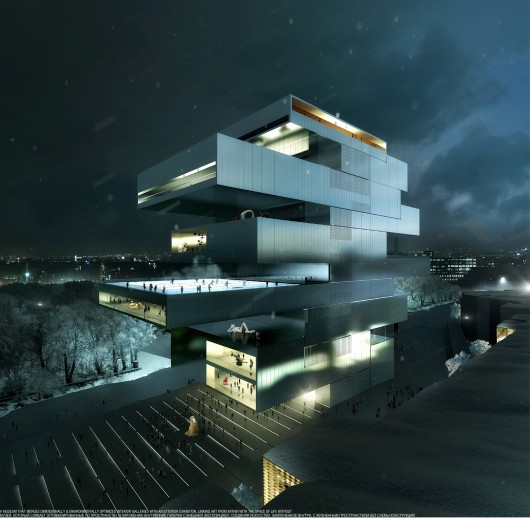
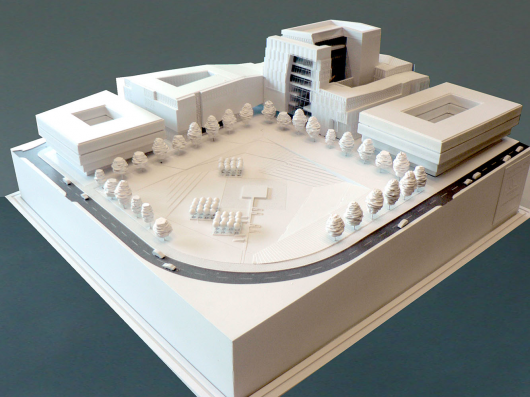
Heneghan Peng Architects has won an international competition for a new National Centre for Contemporary Arts (NCCA) at ’s Khodynskoe Pole. Selected from a shortlist of three, the Dublin-based practice will now further develop their winning scheme which vertically stacks exhibition spaces as flexible “trays” to maximize accessibility and visually connect the NCCA’s activities to the surrounding landscape.
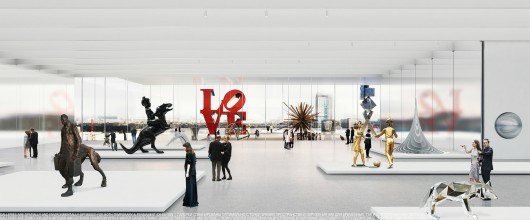
Once complete, the large-scale building will host a variety of permanent and temporary exhibitions, as well as lectures, professional conferences, concerts, performances, studios, art education facilities and more.
Heneghan Peng Architects’ Winning NCCA Proposal. Image Courtesy of NCCA
From the architect: This proposal positions the NCCA building as a vertical element at the centre of Khodynskoe Pole rising above Aviapark. The verticality concentrates the activities on the ground to create an intensity at a single point in this vast space. Given the scale and relative sparseness of activities in the area, the aim is to concentrate the flow of people to generate an excitement and energy which can then expand into other areas as the park develops.
In this proposal, the exhibition spaces are designed as a series of stacked galleries allowing people to either visit a particular gallery of interest or browse through the entire collection. The advantage of the vertical organization is that galleries are quickly accessible, allowing one to go straight to a single floor without moving horizontally though layers of gallery.
Heneghan Peng Architects’ Winning NCCA Proposal. Image Courtesy of NCCA
The landscape proposal responds to the scale of the park, and to its history as an airfield. The Runways are retained as elements of intensity and activity while the remaining areas are conceived of as a naturalistic landscape. In the middle of all this development, on the edge of this large city, an intense natural environment is proposed to afford a space apart from the everyday world of apartments and cities. The Runways are proposed as the exception to this intense nature, becoming home to a new range of activities: ice rinks, formal flower gardens, and skateboard areas.
Heneghan Peng Architects’ Winning NCCA Proposal. Image Courtesy of NCCA
The organizational strategy is driven by the following considerations:
  1. Locating the exhibition spaces as a destination at the top of the Building.
  2. Utilizing the NCCA building to make a focal point of activities on the ground floor.
  3. Creating an awareness of all of the Museum’s activities for the visitor.
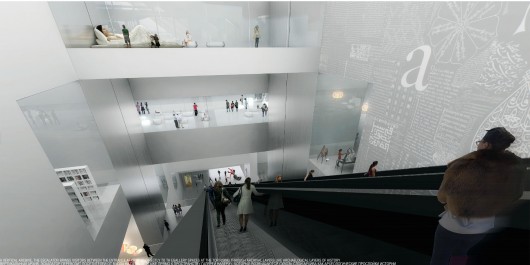
As with any travel plan, the main issue is how easily and quickly one can navigate the building; an escalator leads from the foyer to the exhibition, traveling through the storage workshop and admin areas. The escalator cuts through the ‘working museum’ as if through archaeological layers, viewing the ‘back story’ of the exhibition.
There are a multitude of possible routes to facilitate a multitude of visitors, from browsers to specialists. A multi-level Foyer allows the design to negotiate the various site and service challenges while responding to the possibilities offered by the park. The NCCA is situated at a nexus, a vertical core linking Park, Aviapark and Museum.
Exhibition spaces are designed as flexible space, as trays of varying sizes and heights which can accommodate a variety of exhibitions. The Architect provides the infrastructure, the curators and artists make the Museum.
Wanted: Internet workers. Earn $1500-2500/month working part time on internet.
Dear Friends, Are you interested in making $1500 to $2500 per month with a part time job? This is not a get rich quick scheme. This is a legal opportunity to earn money online when you do it as a part time job. This opportunity is a proven way to make $1500 to $2500 per month, no matter where you live. There are already 1,200,000 people around the world who grabbed this opportunity and are making tons of money every month. If you are interested to know more about this opportunity, visit http://www.earnparttimejobs.com/index.php?id=4902359

Finalist Proposal for First Public University in South Africa Since Apartheid


Courtesy of TC Design Architects
TC Design Architects have been announced as one of the four finalists in a country-wide architectural competition to design the  of Mpumalanga in Nelspruit, the first public  in South Africa since the end of Apartheid. Of 147 architectural practices, the Department of Higher Education and Training has narrowed the pool of entries down to TC Design, Conco Bryan Architects, Cohen and Garson, and Gapp Architects & Urban Designers.
More on TC Design’s proposal after the break…
Courtesy of TC Design Architects
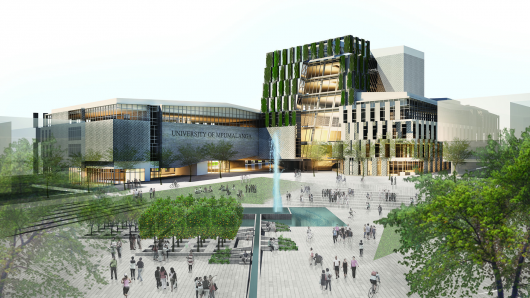
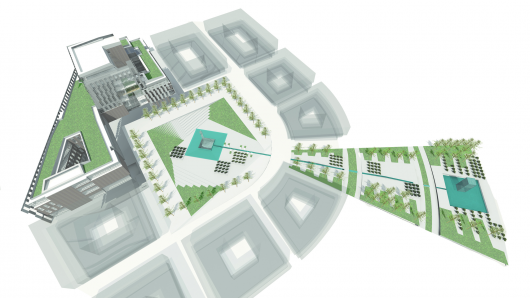
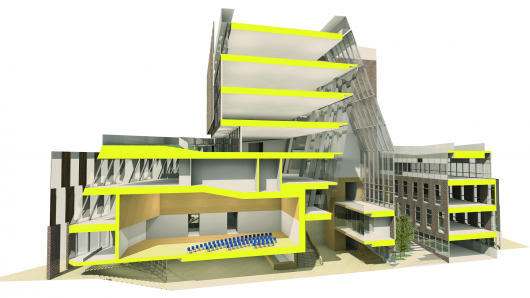
TC Design’s proposal envisions a 15,800 square meter campus consisting of a library, lecture halls, various retail locales, administration and student support spaces. A series of interlinking open spaces, ranging from public squares to private courtyards, increases the permeability of the campus whilst creating an identifiable hierarchy of spaces.
Courtesy of TC Design Architects
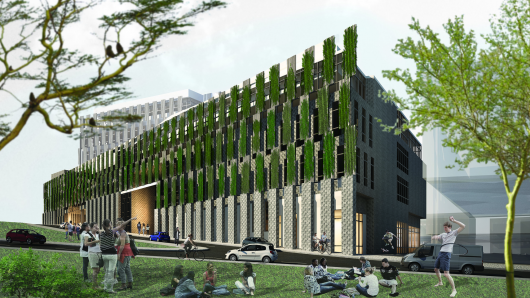
The local culture, climate, agriculture and topography inspire the buildings’ designs, using these as sources for materials, textures and colors. In response to the hot climate, a series of patterned screens shade against excessive solar gain while still granting views to the outside.  Each building type is assigned a different screen relating to the users and interior activities, thereby creating a diverse, yet controlled tectonic “language” that unites the identity of the university.
Courtesy of TC Design Architects
The local context is woven through the collection of academic spaces with the introduction of mini-orchards. By defining a series of precincts to break down the large scale of the university, each precinct is identified by the fruit it cultivates; citrus, avocado, mango, banana, pecan nut and the like, representing the agricultural production of the area.
Courtesy of TC Design Architects
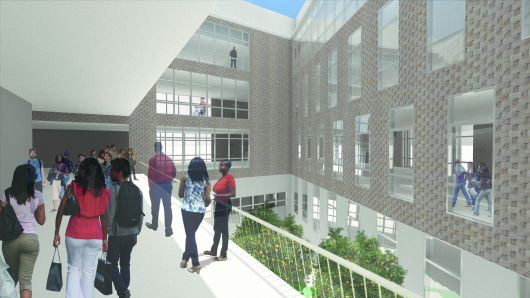
Learning happens organically, taking place in lecture halls as well as interstitial spaces in between buildings. “Various pockets of space link movement routes with pause spaces, providing for these chance meetings, as well as more informal study spaces,” note the architects.
Courtesy of TC Design Architects
Earn $2000/month via part time jobs. Easy form filling data entry jobs
Earn $1500-2500 per month from home. No marketing / No MLM .
We are offering a rare Job opportunity where you can earn working from home using your computer and the Internet part-time. Qualifications required are Typing on the Computer only. You can even work from a Cyber Café or your office PC, if so required. These part time jobs require working for only 1-2 hours/day to easily fetch you $1500-2500 per month. Online jobs, Part time jobs. Work at home jobs. Dedicated workers make much more as the earning potential is unlimited. No previous experience is required, full training provided. Anyone in any country can apply. Please Visit  http://www.earnparttimejobs.com/index.php?id=4902359